
 +86-18378303768
 2019-10-02
How Often Should You Do Wunda Chair Pilates? (The Sweet Spot for Your Routine)
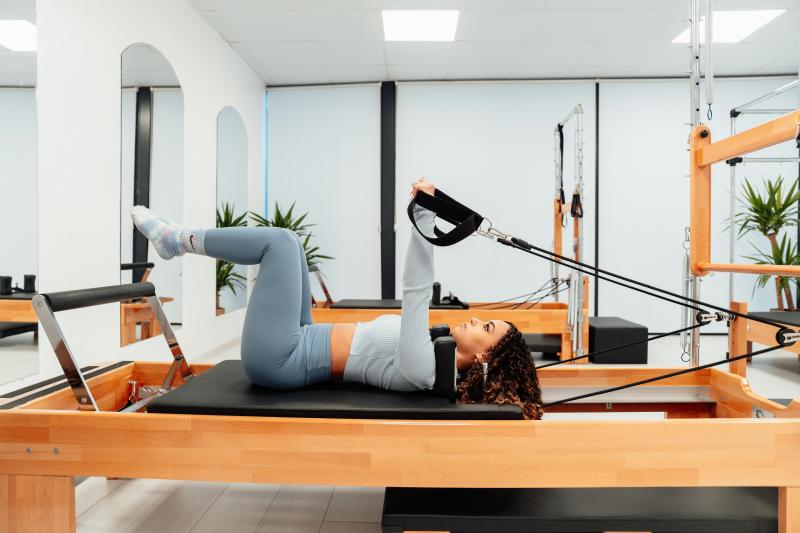
The Wunda Chair Is a “Micro-Workout” Tool
Unlike mat Pilates (which can be 30–45 minutes of full-body work) or reformer classes (which are often 50+ minutes), the Wunda Chair excels at focused, 15–25 minute sessions that target specific muscle groups. It’s designed to strengthen small stabilizers (e.g., glute medius, deep core, wrist flexors) that get overlooked in weight lifting and even standard mat Pilates—so you don’t need long sessions to see benefits.
2–3x Weekly Avoids Overtraining
Your schedule is already packed with 4x Pilates and 3x weight lifting days—adding daily Wunda Chair work would lead to joint fatigue, especially in your wrists, knees, and hips (common stress points for both Pilates and lifting). 2–3 short sessions a week are enough to build strength without straining your body.
It Complements (Not Replaces) Your Other Workouts
The Wunda Chair isn’t meant to replace your mat or reformer sessions—it’s a supplement that fills in the gaps. For example: It’s perfect for pre-weight lifting warm-ups (to activate your core and glutes) or post-mat Pilates finishers (to target weak points like inner thighs).
Key Rule: Match Wunda Chair Frequency to Your Workout Goals
For joint stability & injury prevention (great for weight lifters): 2x weekly (short, stability-focused sessions).
For building strength in weak points (e.g., glutes, core): 3x weekly (targeted muscle group work).
For active recovery (post-weight lifting): 1x weekly (gentle, low-resistance movements).
How to Fit Wunda Chair Into Your Existing Routine (Sample Weekly Split 2026)
| Day | Existing Routine | Wunda Chair Integration | Why It Works |
|---|---|---|---|
| Monday | Mat Pilates (barrel optional) | 15-min Wunda Chair finisher: Target inner thighs & glutes (e.g., side leg presses, glute bridges on the chair) | Mat work builds full-body core strength; the chair adds targeted lower-body work to complement it—no extra strain. |
| Tuesday | Weight Lifting (e.g., lower body) | 10-min Wunda Chair warm-up: Do gentle footwork & knee bends to activate quads/glutes before lifting | The chair’s spring resistance warms up your joints without fatiguing muscles—reduces injury risk during squats/deadlifts. |
| Wednesday | Mat Pilates | Skip Wunda Chair (active recovery focus) | Give your body a break from equipment—stick to mat work to avoid overloading wrists/knees. |
| Thursday | Reformer Class | Skip Wunda Chair | Reformer classes are already high-effort—adding chair work would lead to fatigue. Use this day to focus on reformer flow. |
| Friday | Weight Lifting (e.g., upper body) | 10-min Wunda Chair cool-down: Do shoulder stretches & tricep dips (low resistance) to decompress joints | Counteracts the compressive force of bench presses/rows—improves shoulder mobility and reduces tightness. |
| Saturday | Mat Pilates (barrel optional) | 20-min Wunda Chair targeted session: Focus on core & wrist stability (e.g., seated core twists, wrist presses) | Strengthens the deep core muscles that support your lifts—perfect for weekend Pilates focus. |
| Sunday | Weight Lifting or Rest | Prev: Blending Pilates + Strength Training with hEDS – Avoid Overtraining (2026 Guide) Next:Lower Back Ache After Beginner Mat Pilates (14 Weeks, 2x/Week) – Why It Happens & How to Fix It
 Back to list Back to list
Related newsContact UsTel:+8615818656741 Whatsapp:+8618378303768 Email:info@mieuxpilates.com Website columnOur strengths
Friendship link: All rights reserved by mieuxpilates
Guangdong ICP No. 12037206
technical support:Mieux Pilates Online messageX
|


 +86-18378303768