
 +86-18378303768
Why Pilates Works for Winged Scapula & Trap Muscle Imbalances
Winged scapula happens when the muscles that stabilize your shoulder blade (especially the serratus anterior, lower trapezius, and rhomboids) are weak, while overactive upper traps and chest muscles pull your scapula out of alignment. Desk work tightens your chest and rounds your shoulders; pole dancing adds dynamic shoulder stress—creating a vicious cycle of discomfort.
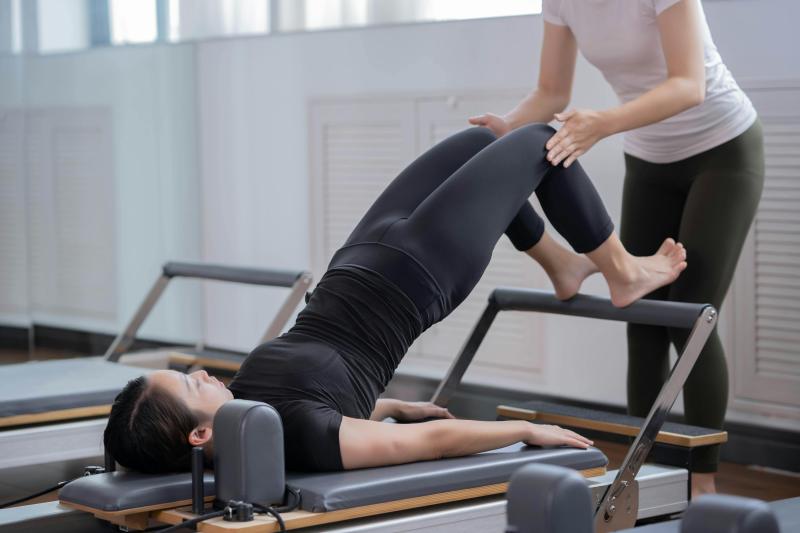
Pilates fixes this by:
- Isolating Weak Stabilizing MusclesUnlike weightlifting (which can overload your already-sensitive shoulders) or group yoga (which often skips targeted scapula work), Pilates uses slow, controlled movements to activate exactly the muscles you need: lower traps, serratus anterior, and rhomboids. Think reformer arm pulls with light spring tension, mat “prone Y’s,” or Cadillac scapula squeezes—moves that force you to engage weak muscles without straining your shoulder joint.
- Releasing Overactive Upper Traps & ChestPilates incorporates chest openers (e.g., reformer spine stretches, mat cobra variations) and upper trap releases to reduce the “pull” that’s worsening your winging. This balance of strengthening and stretching is key—something your physio exercises might be missing if they only focus on one piece of the puzzle.
- Building Core & Glute Strength for Pole Dancing SupportYour pole dancing goals are a bonus here: Pilates’ core and glute work (e.g., reformer glute bridges, mat side planks) stabilizes your entire body, so your shoulders don’t have to compensate during pole moves. Strong glutes and core take pressure off your upper body—critical for both rehab and pole performance.
Real Rehab Success Stories: Pilates for Winged Scapula
Don’t just take our word for it—here are two people who fixed their scapula issues with Pilates (and chose different class types):
Story 1: Private Pilates Saved Sarah’s Shoulder (And Her Pole Career)
Sarah, 28, had winged scapula from 10+ years of desk work and competitive pole dancing. Group Pilates and weightlifting made her shoulder worse—until she tried private reformer lessons:
“My private instructor watched my form like a hawk. She realized I was using my upper traps for every arm move, so she modified reformer exercises to force me to engage my lower traps—she even used a resistance band under my shoulder blade to give me tactile feedback. Within 6 weeks, I could feel my lower traps working for the first time. By 3 months, my winging was almost gone, and I could do pole inversions without pain. Private lessons were worth every penny—they were 100% tailored to my shoulder.”
Key takeaway: Private lessons are ideal for pinpointing muscle engagement issues (like not feeling your lower traps) and modifying moves to avoid shoulder strain.
Story 2: Group Pilates Worked for Mike (With a Few Tweaks)
Mike, 34, had mild winged scapula from desk work and casual rock climbing. He couldn’t afford private lessons, so he stuck to a beginner group reformer class—with one rule: he talked to the instructor every time before class.
“I told my instructor about my winged scapula and that I couldn’t feel my lower traps. She gave me small modifications for every group exercise—like using lighter springs for arm moves, or adding a scapula squeeze hold to the end of each rep. I also stayed after class for 5 minutes to do 2 targeted lower trap exercises she recommended. In 8 weeks, my shoulder discomfort faded, and my scapula alignment improved. Group classes worked because I spoke up—and the instructor was willing to adapt.”
Key takeaway: Group classes can work if you have mild issues and a flexible instructor—but you need to advocate for yourself.
Private vs. Group Pilates for Your Rehab: Which Is Right for You?
To decide, let’s break down the pros, cons, and ideal scenarios for each—based on your specific struggles (not feeling your lower traps, shoulder sensitivity, pole dancing goals).
| Factor | Private Pilates Lessons | Group Pilates Lessons |
|---|---|---|
| Muscle Engagement Support | Perfect—instructors use hands-on cues, props (e.g., resistance bands, touch feedback), and custom exercises to help you feel your lower traps/serratus anterior. They’ll stop you from overusing upper traps. | Hit or miss—group instructors can’t give everyone hands-on feedback. You’ll need to ask for modifications every time to avoid compensating. |
| Shoulder Safety | Ideal for sensitive shoulders—instructors will adjust spring tension, move range, and form to avoid straining your winged scapula. No “keeping up with the group” pressure. | Risky if unmodified—group classes often use one-size-fits-all exercises that can overload your shoulder (e.g., heavy reformer arm presses). Only safe if you modify aggressively. |
| Pole Dancing Alignment Integration | Customizable—you can tell your instructor your pole goals (e.g., inversions, holds) and they’ll design Pilates moves to support those specific skills. | General support only—group classes focus on overall strength, not pole-specific alignment. You’ll need to add pole-specific Pilates moves on your own. |
| Cost vs. Value | More expensive (but worth it for targeted rehab)—invest if your shoulder discomfort is constant, or weightlifting made it worse. | Budget-friendly—great if your discomfort is mild, and you’re willing to advocate for yourself. |
| Best For |
Related casesContact UsTel:+8615818656741 Whatsapp:+8618378303768 Email:info@mieuxpilates.com Website columnOur strengths
Friendship link: All rights reserved by mieuxpilates
Guangdong ICP No. 12037206
technical support:Mieux Pilates Online messageX
|


 +86-18378303768