
 +86-18378303768
Why Fast-Paced Group Reformer Classes Are High-Risk for Severe Hypermobility
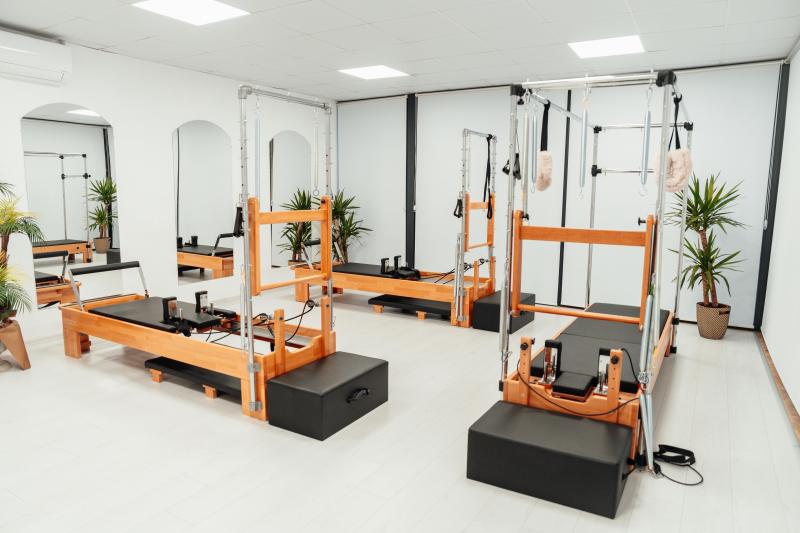
Pace eliminates form stabilization: Hypermobile joints rely on time to find neutral alignment and engage the stabilizing muscles that prevent overextension. A class that moves to the next exercise before you can root into your form forces your body to “rush” stability—this trains bad habits (e.g., collapsing into a hyper-extended knee or shoulder) that build over time and lead to chronic pain.
No individual cueing = uncorrected micro-movements: Even with your body awareness, hypermobility creates subtle overextensions (e.g., a slight lumbar arch, a hyperextended wrist on the footbar) that a trained instructor would catch with hands-on correction. In a class of 8–10 people, these micro-movements go unaddressed—and they’re the primary cause of long-term joint stress for hypermobile Pilates practitioners.
Dance-focused flows prioritize range over control: Instructors with dance backgrounds often lean into large, dynamic movements (a strength for dancers!)—but for hypermobile bodies, range of motion is never the goal (your body already has plenty). The goal is to build muscle control around that range—something fast flows simply don’t prioritize.
Is a Home Professional Reformer + Occasional One-on-Ones a Reasonable Path for HMS? (Instructor/Hypermobile Practitioner Consensus: YES)
1. Self-paced practice = non-negotiable for hypermobility
2. Professional reformer = consistent, safe tactile feedback
3. Occasional one-on-ones = targeted expert guidance (no wasted money)
Refine neutral spine, breath work, and foundational form with hands-on correction (the gold standard for HMS).
Get personalized modifications for your specific hypermobile joints (e.g., wrist, knee, shoulder).
Ask the instructor to design one foundational home reformer flow for you to repeat—this eliminates guesswork and ensures your home practice is aligned with hypermobility best practices.
Check in on your progress to add small, safe variations (e.g., lightening a spring instead of adding a dynamic movement) when your body is ready.
4. Reformer vs. mat work = the right choice for your joint strain
Key Considerations You Might Be Overlooking (Easy Fixes to Add to Your Plan)
1. Prioritize a reformer with adjustable footbar height and stable shoulder blocks
Related cases
Contact Us
Tel:+8615818656741 Whatsapp:+8618378303768 Email:info@mieuxpilates.com
Website column
Our strengths
-
Material
Mieux Pilates uses premium materials

-
Transportation
Mieux Pilates provides global transportation

-
Warranty
Our Pilates products have a 3-year warranty.

Friendship link:
All rights reserved by mieuxpilates
Guangdong ICP No. 12037206
technical support:Mieux Pilates +86-18378303768