
 +86-18378303768
How Often to Do Strength Training (Perfect for Your 2x/Week Reformer Schedule)
2 days/week of strength training: These should be separate from your reformer days (e.g., reformer on Mon/Thu, strength on Tue/Fri) or 1 full day + 1 short day (if your schedule is tight). This gives your muscles 48 hours to recover between sessions, which is key for building strength (and avoiding soreness that messes with your reformer form).
Keep sessions 30–45 minutes: You don’t need long workouts! Focus on quality over quantity—targeted exercises that build the exact muscles you need for back rowing and long box series will be way more effective than a 60-minute full-body blast.
1 optional 10-minute cardio day: If you have time (e.g., a walk, light jog, or dance party), add a short cardio session once a week. It boosts endurance (helpful for longer level 3 reformer flows) and keeps your heart healthy—without stealing energy from your strength or Pilates work.
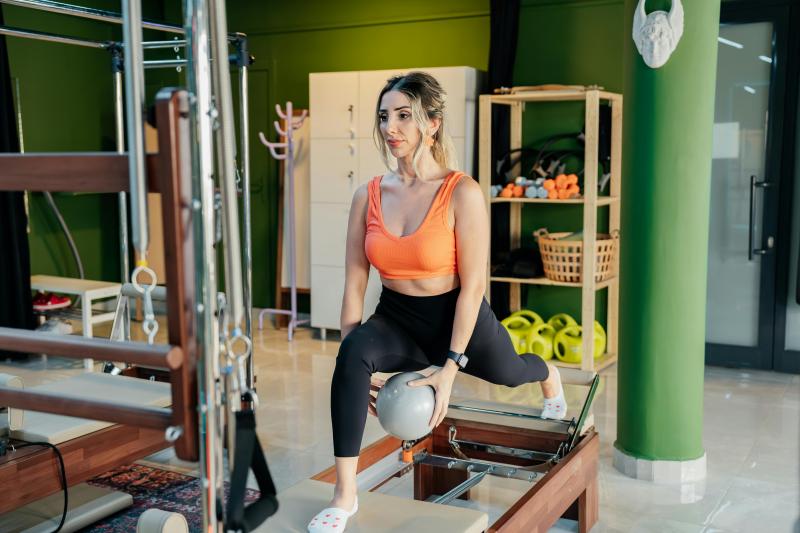
Best Strength Exercises to Nail Back Rowing, Long Box Series & Level 3 Reformer
1. Upper Back Strength (For Back Rowing & Long Box Upper Body Moves)
Bent-Over Dumbbell Rows (2 sets of 10–12 reps/side): Grab light dumbbells (start with 5–8 lbs—you want to feel the burn in your upper back, not your arms). Hinge at the hips (soft knees, back flat), hold dumbbells down, then pull them up toward your ribs (elbows close to your body). Squeeze your shoulder blades together at the top—this is the same engagement you need for reformer back rowing! Lower slowly (2 seconds) to maximize control.
Resistance Band Rows (2 sets of 12–15 reps): Anchor a resistance band to a door handle or sturdy piece of furniture (low enough that you can hinge forward). Hold one end in each hand, step back to create tension, then pull the band toward your chest (elbows back, shoulder blades squeezed). This mimics the reformer’s strap resistance—perfect for building the “pull” motion you need.
Face Pulls (2 sets of 12 reps): Attach a resistance band to a high anchor (above shoulder height). Hold the band with both hands, pull it toward your forehead (elbows high, like you’re “pulling your ears back”), then release slowly. This strengthens the small stabilizer muscles in your upper back and shoulders—critical for avoiding shoulder strain during long box series (which often involves reaching and pulling).
2. Core Stability (For Long Box Series & All Level 3 Moves)
Dead Bugs (2 sets of 10 reps/side): Lie on your back, arms up toward the ceiling, knees bent to 90° (tabletop). Lower one arm behind your head and the opposite leg toward the floor (keep lower back pressed into the mat), then bring them back up. This is Pilates-adjacent and builds the same core control you need for long box moves—focus on slow, intentional movement (no rushing!).
Plank Shoulder Taps (2 sets of 8 taps/side): Get into a high plank (hands under shoulders, body in a straight line from head to heels). Keep your core tight, then tap your opposite shoulder with one hand (don’t twist your hips!). This builds anti-rotation strength—exactly what you need to stay stable during long box series, where your body has to resist twisting as you move your arms/legs.
Pallof Press (2 sets of 10 reps/side): Hold a resistance band with both hands (or a dumbbell) at chest height. Stand sideways to a door (band anchored to the door), then push the band away from your chest (resist the pull of the band twisting your torso). This targets your obliques and deep core—critical for level 3 moves that require side-to-side stability.
3. Posterior Chain Strength (Glutes, Hamstrings, Lower Back—For Overall Reformer Progress)
Glute Bridges (2 sets of 12–15 reps): Lie on your back, knees bent, feet flat. Lift your hips toward the ceiling (squeeze glutes at the top), hold for 1 breath, then lower slowly. For an extra challenge, lift one leg (single-leg bridge) to mimic the single-leg control you need for long box leg work.
Romanian Deadlifts (RDLs) (2 sets of 10–12 reps): Grab dumbbells (light to medium), stand with feet hip-width. Hinge at the hips (push your butt back), lower the dumbbells toward the floor (keep knees soft, back flat), then stand back up (squeeze glutes at the top). This builds hamstring and lower back strength—key for long box moves where you have to hinge forward with control.
Clamshells (2 sets of 12 reps/side): Lie on your side, knees bent to 45°. Keep your feet together, then lift your top knee (like opening a clamshell) while keeping your hips stacked. Squeeze your glute at the top—this strengthens your glute medius, which helps with balance during level 3 reformer moves (and keeps your hips stable during back rowing).
Sample Weekly Routine (Fits Your 2x/Week Reformer + Strength Goals)
Monday: Reformer Class (focus on back rowing and long box series to practice your new strength!)
Tuesday: Strength Training (Upper Back + Core—Bent-Over Rows, Resistance Band Rows, Dead Bugs, Plank Shoulder Taps)
Wednesday: Rest or 10-Minute Cardio (walk, light jog, or dance)
Thursday: Reformer Class (level up your practice—notice how your strength translates!)
Friday: Strength Training (Posterior Chain + Core—Glute Bridges, RDLs, Clamshells, Pallof Press)
Saturday: Rest or Active Recovery (gentle stretching, yoga flow, or a walk)
Sunday: Rest
Key Tips to Make This Work for You
Start light with weights: Pilates is about control, not heavy lifting. If you’re unsure, go lighter—you can always add weight as you get stronger. The goal is to feel muscle fatigue (a “burn”) by the last 2–3 reps, not pain.
Focus on form over speed: Just like reformer, strength training works best when you move slowly and intentionally. Rushing through reps won’t build the control you need for level 3 Pilates.
Check in with your instructor: After 2–3 weeks of strength training, show your instructor a few of these moves—they can tweak your form to make sure it’s perfectly aligned with your reformer goals (e.g., adjusting your row to match the reformer back rowing engagement).
Don’t skip recovery: Sore muscles are normal, but if you’re too sore to do reformer, take an extra rest day. Recovery is when your muscles grow—so it’s just as important as the workouts themselves.


 +86-18378303768